

Energy
As a Climate-Positive Organisation, BUas works towards a sustainable campus and organisation through a range of topics, one of which is energy.
The Energy topic covers two interconnected elements: energy consumption and energy generation.
- Energy Consumption is about how much energy our buildings use for heating, cooling, lighting, ventilation, and equipment, and reducing that demand as far as possible in line with Paris Proof targets for the education sector.
- Energy Generation is about how we produce energy on and around campus, and about maximising the use of externally sourced renewable energy where we cannot generate it ourselves.
Energy consumption and Indoor health and comfort are closely connected, and the two do not always pull in the same direction. Ventilation requirements, thermal comfort, and air quality all affect how much energy our buildings use. Health and comfort are covered as a separate topic on this portal, and the decisions we make on energy will need to stay in dialogue with that work.
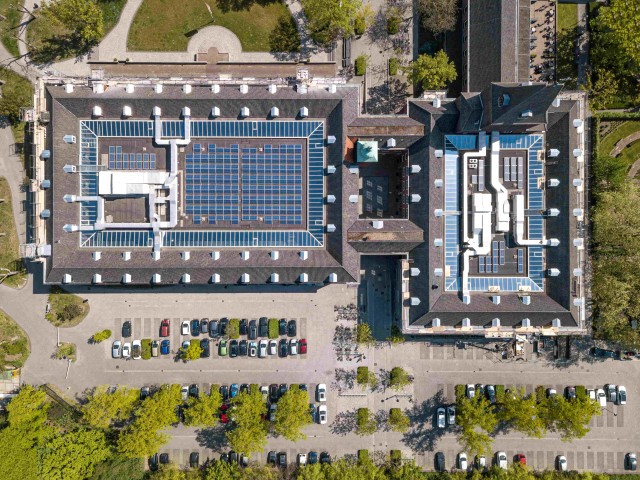
BUas is on a clear path to a fully Paris Proof campus. Our target: an energy intensity of 70 kWh/m² per year across all three campus buildings — Ocean, Frontier, and Horizon — alongside continuous reduction in carbon emissions. Ocean has already reached this milestone. Frontier and Horizon are close. To bring all three buildings in line, BUas is developing a phased technical roadmap in partnership with Haskoning. This roadmap will identify the energy measures that deliver the greatest impact — not only in terms of CO₂ reduction, but also in improving the health, comfort, and wellbeing of everyone who studies and works, and everything that lives on our campus.
The challenges here are genuine: heritage constraints, significant investments, long payback periods, budget approval cycles, and open questions about our district heating supplier's transition timeline. We'll be documenting the decisions, the trade-offs, and the things we're still working out. Where possible, we use planned maintenance moments as an opportunity to implement energy improvements — replacing like-for-like with higher-efficiency alternatives where budget and technical constraints allow.